When Meta introduced audience segments for manual Sales campaigns in 2024, they changed everything I knew about targeting. More than two years later, not nearly enough advertisers are getting the value out of audience segments that they should.
I’m not going to use this post to highlight all of the many wonders of Audience Segments. I’ve covered this feature extensively, and I even created a free mini-course on it if you want to learn more.
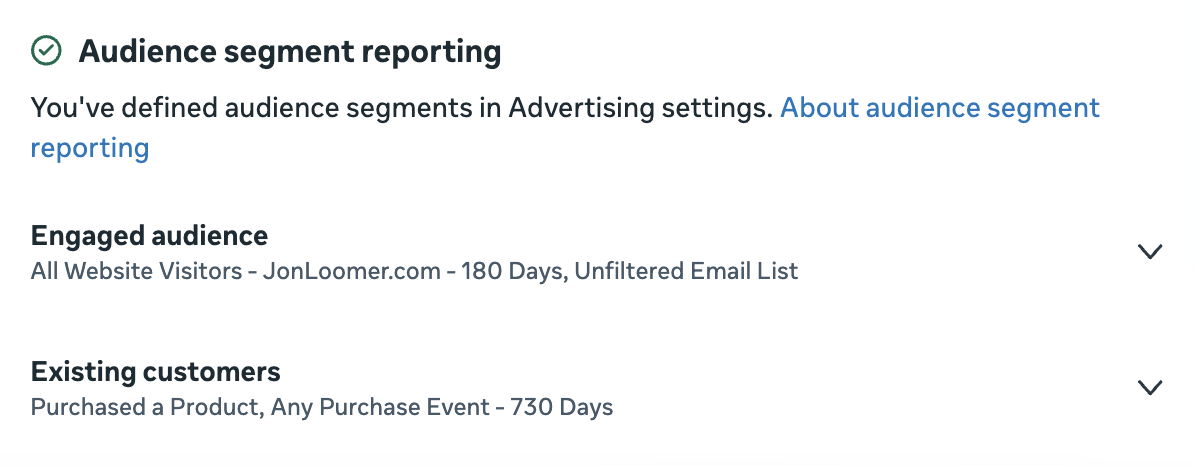
Today, I want to focus on the unfortunate problems with this feature. These problems don’t make audience segments any less valuable, but they prevent this amazing tool from being infinitely more useful.
Some of these issues are so mind-numbingly frustrating and obvious that I’m not sure why I have to mention them. Folks within Meta, if you’re reading this, I’m begging you to make some important improvements.
Let’s get to it…
1. Make Available for All Campaign Objectives
It’s easy to forget that the origin of audience segments was Advantage+ Shopping Campaigns. Since we had no control over targeting with those campaigns, audience segments gave us insight into who was seeing and acting on our ads. They even allowed us to set an Existing Customer Budget Cap.
When audience segments were expanded in 2024, advertisers were able to get that same visibility into manual Sales campaigns. Meta also added the Engaged Audience segment so that you could see how your website visitors, email list, and other non-customer segments were contributing to results.
This is all amazing, but my complaint from the start was that this visibility is only available for Sales campaigns. If you attempt to perform a breakdown by audience segments for any other campaign objective, you’ll be disappointed.
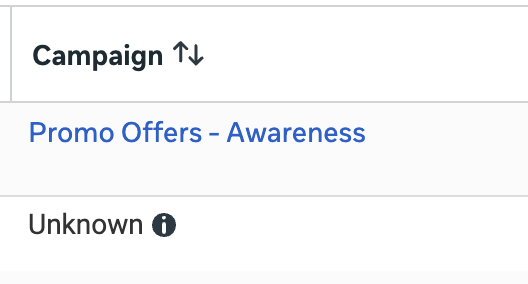
Why can’t we use this for Leads campaigns? Why should it be limited by campaign objective at all?
I complained about this in 2024, but I also understood that the feature was created with Sales campaigns in mind. Well, it’s been more than two years. Why is this still not available?
I’ve often had calls with clients who swear by remarketing, and we go through this whole conversation about audience segments. I ask them to perform a breakdown, but then I quickly realize they’re only running Leads campaigns. Audience segments are worthless in that case.
I’d honestly be curious how much delivery to remarketing and new audiences changes by campaign objective. I bet it does. But until Meta further expands this feature, it will only be a guess.
2. Predefine Audience Segments
This is again something I suggested in a video more than two years ago. If Meta wants advertisers to use audience segments, predefining them would be a great way to get them started so they can see the value.
One of the many problems is that most advertisers don’t know what audience segments are. They don’t know that they need to define them. And when they define them, they often do so incorrectly (define your audience segments as thoroughly as possible!).
Advertisers don’t know what they’re missing if their audience segments are either not defined or defined poorly. What if Meta predefined the Engaged Audience and Existing Customers segments for us?
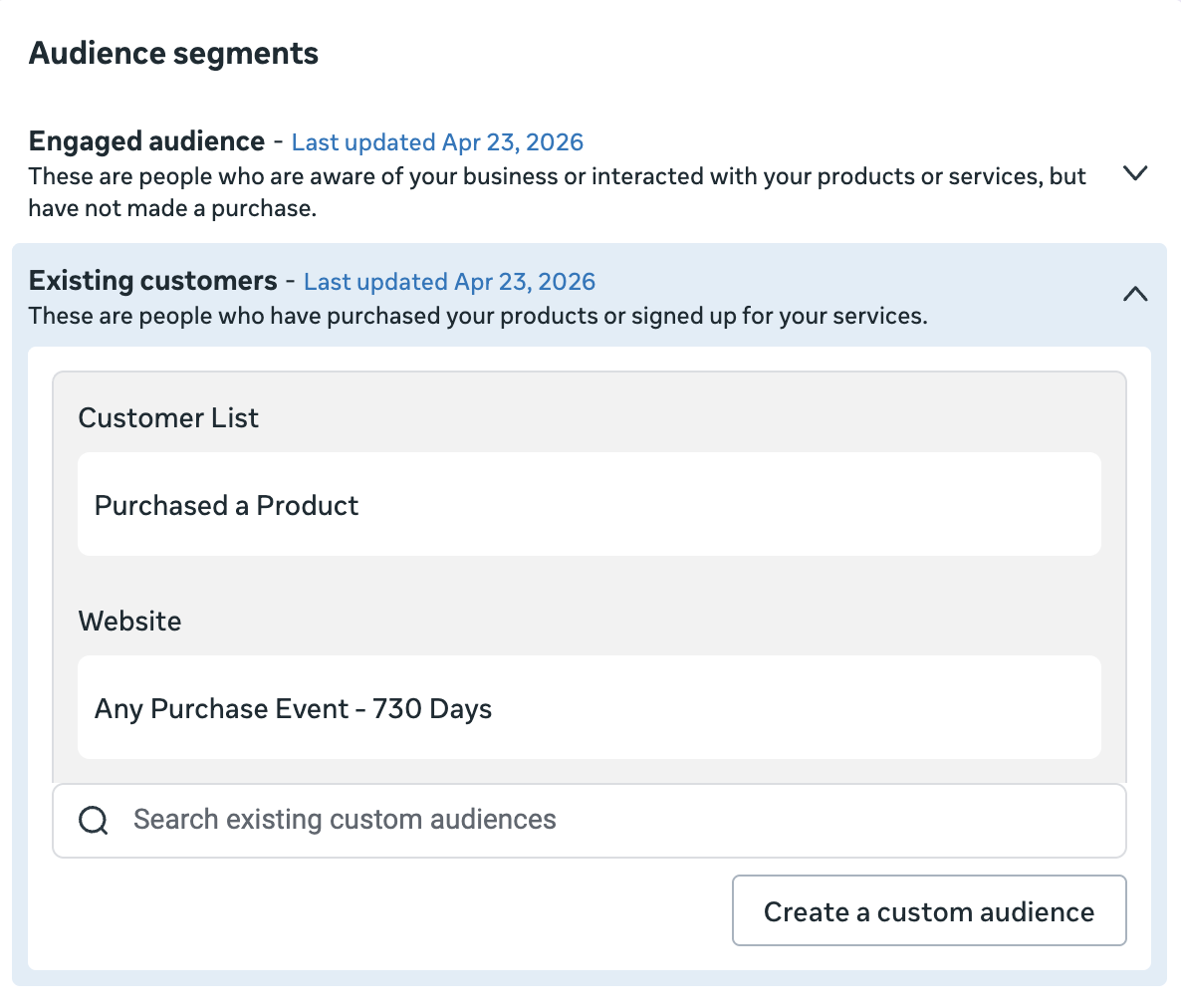
It’s not at all that complicated. It would be done entirely with conversion event data. Meta could predefine Existing Customers as all people who fired the Purchase event during the past 730 days. And Engaged Audience could be all pixel activity and event data. Meta doesn’t even need custom audiences to define these (more evidence of that later).
This would at least give every advertiser a baseline to work with so that they can use audience segments and see their value. But they could edit the definitions if they wanted to. One reason might be that an advertiser might have offline customer data in custom audiences that Meta doesn’t otherwise have reflected in events.
If I were to guess based on my many interactions with advertisers, about 5% of advertisers define their audience segments at all. But a small percentage of that 5% define them thoroughly and correctly.
Meta could go a long way toward improving these percentages. And if they did, so many advertisers would approach targeting differently.
3. Use Audience Segments to Inform Customer Lifecycle Strategy
Meta rolled out Customer Lifecycle Strategy earlier this year, and the way it was done is honestly confusing and frustrating.
This feature allows you to decide whether you want to reach all potential customers or only acquire new customers.
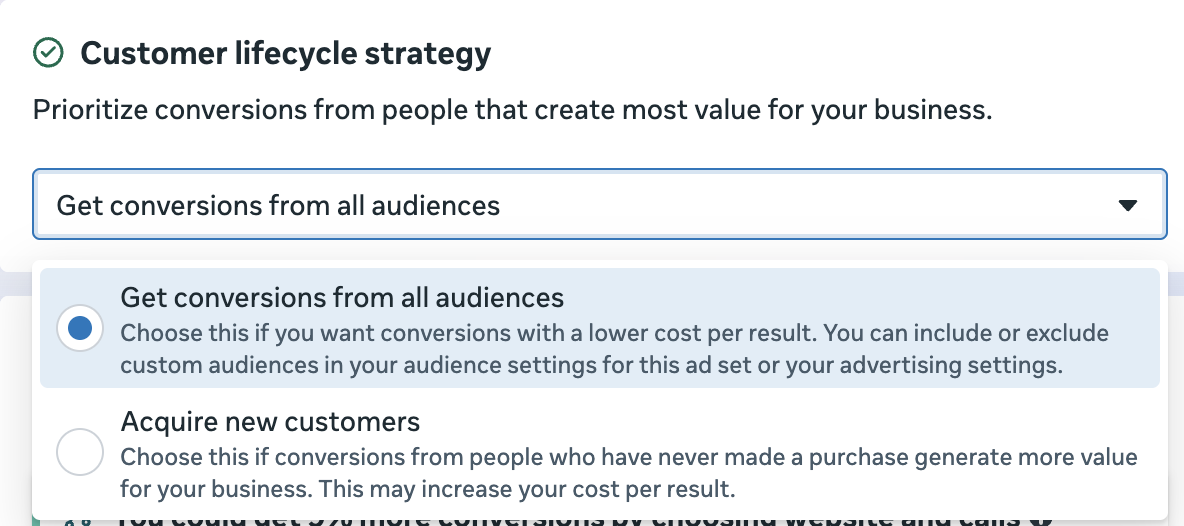
If you choose to only acquire new customers, you then need to define the custom audiences you want to exclude that reflect your existing customers and engaged audience.
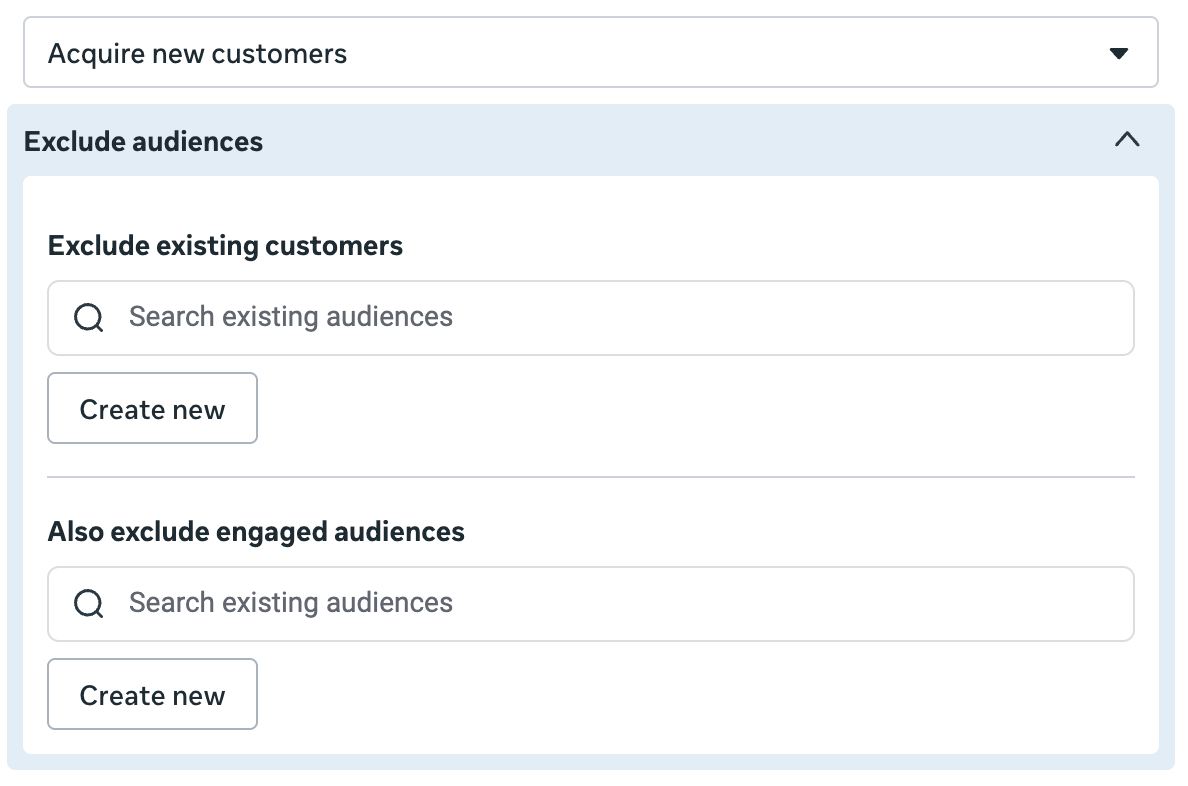
Sound familiar? Why would this be necessary? If you already defined these audience segments in your Advertising Settings, why is Meta forcing you to enter them manually again here?
A few months ago, Meta started trying to suggest custom audiences to exclude to acquire new customers. Do you think they used the custom audiences that define your existing customers in Advertising Settings? NO! They came up with completely random suggestions that made no sense.
Recently, Meta at least took a step forward by offering automatic exclusions based on purchase event data.
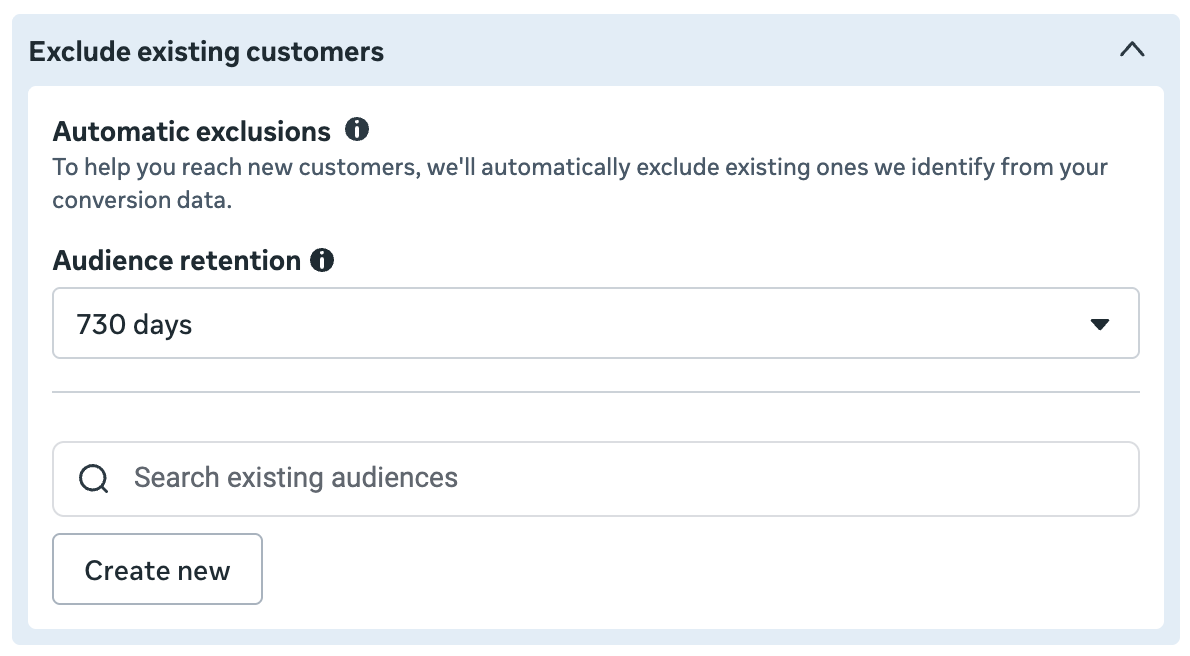
The good news is that my previous request for predefining audience segments with event data is clearly possible. Meta’s doing it here!
But it’s wild to me that the existing customers and engaged audience definitions in Advertising Settings are completely disconnected from what’s in Customer Lifecycle Strategy. You’d think that this mess of defining them for a second time could be skipped entirely. Couldn’t these be synced, with the option to edit what’s used in either place?
4. Create Value Rules Using Audience Segments
Earlier this year, Meta introduced value rules for audiences. Among other things, these new value rules allow advertisers to bid more or less for existing customers, engaged audiences, and new audiences.
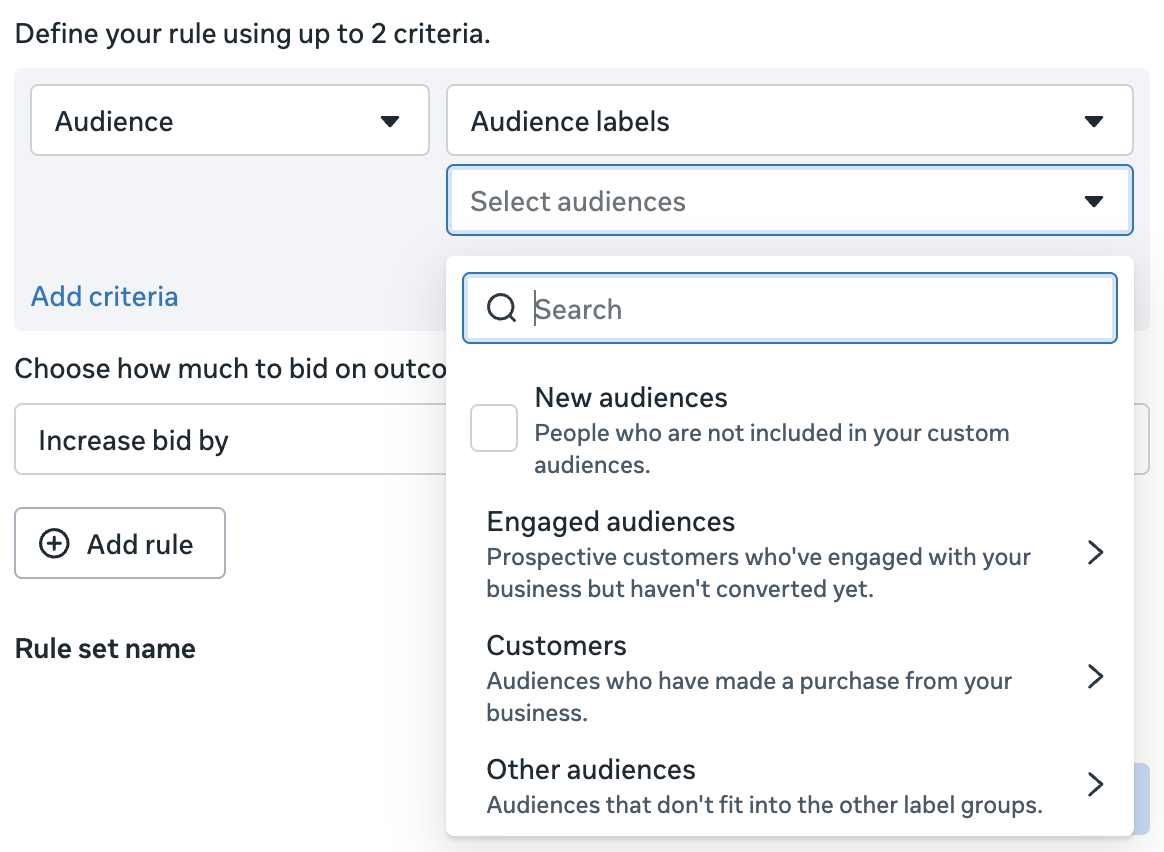
It would make a whole lot of sense if your definitions for Engaged Audience and Existing Customers in Advertising Settings applied here, right? So you could easily bid more or less for those who are or aren’t in one of those groups?
Yeah, well, that’s not how it works. Your definitions are worthless here.
5. Use Customer Audience Labels to Inform Audience Segments
So, how do those value rules for audiences work? Instead of using definitions that advertisers had already set up in Advertising Settings, Meta asked advertisers to take yet another step they otherwise weren’t taking: Assigning labels to custom audiences.
With labels, you can further refine your definition of a customer, for example, so that you can separate high-value and low-value customers.
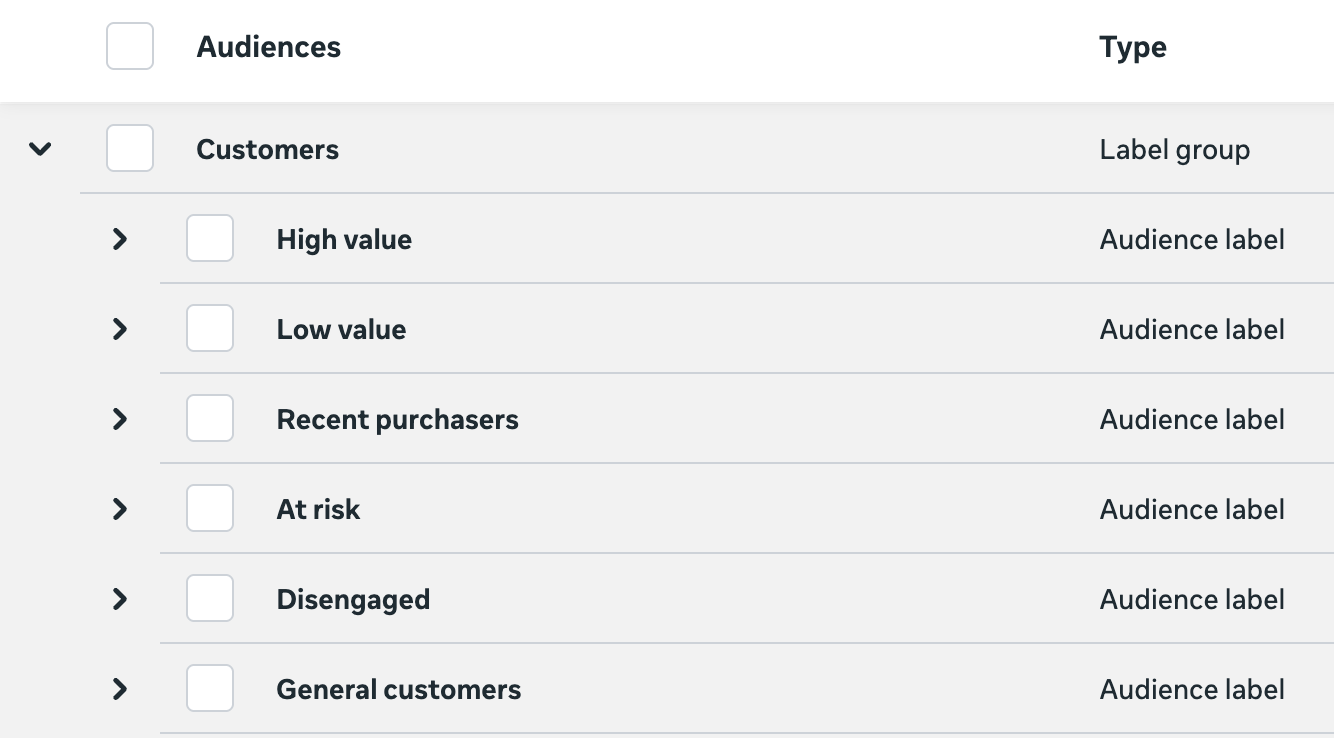
Great. But if you’re going to go through all the work of defining your audiences with labels (it’s a LOT of work), Why wouldn’t these labels carry over to audience segment definitions? If you applied any of the customer-related labels, couldn’t Meta see that as a signal to include them within the Existing Customers definition?
Honestly, at this point we’re creating such a logical web of potential bugs, I can see why it’s not happening. But was this level of segmentation with labels really necessary in the first place? How many advertisers are using it?
Summary of Requests
I’m a huge fan of audience segments, but not nearly enough advertisers are using them. Most of those who are use them incorrectly.
These changes would help (in order):
- Predefine audience segments with event data
- Use audience segment definitions for Customer Lifecycle Strategy
- Create value rules using audience segment definitions
- Make breakdown by audience segments available for all campaign objectives
I don’t even care that much about the labels part, which is probably too complicated at this point. Just give us the rest.
Your Turn
Do you use audience segments? Anything you’d add?
Let me know in the comments below!