Almost every advertiser screws this up…
One of the most common mistakes I see from advertisers is related to audience segments. They either fail to define them at all or do so incorrectly.
What Are Audience Segments?
Audience segments provide incredibly helpful access to additional reporting data. When running sales campaigns, you can use the breakdown by audience segments.
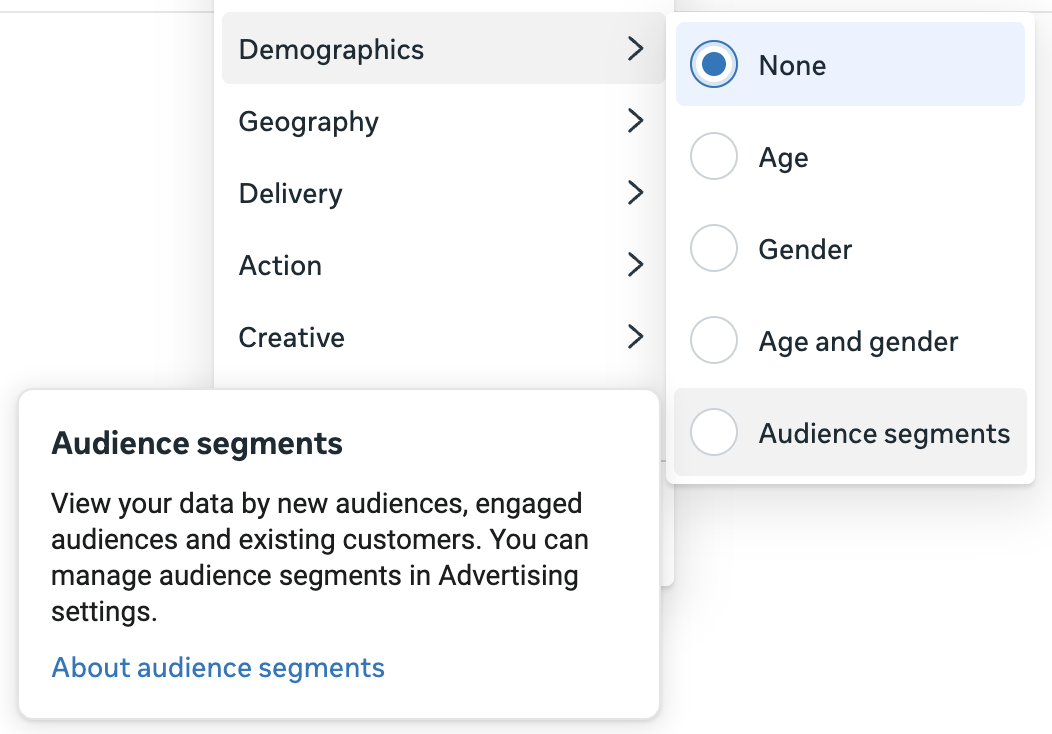
This helps uncover how your spend and results were distributed by audience. When defined correctly, you can see how results are segmented by existing customers, engaged audience, and new audience.

When you have this information, you’ll understand how much remarketing happens naturally with algorithmic targeting. Those who don’t use this feature are often those who feel the need to lean heavily into remarketing strategies.
How to Define Audience Segments
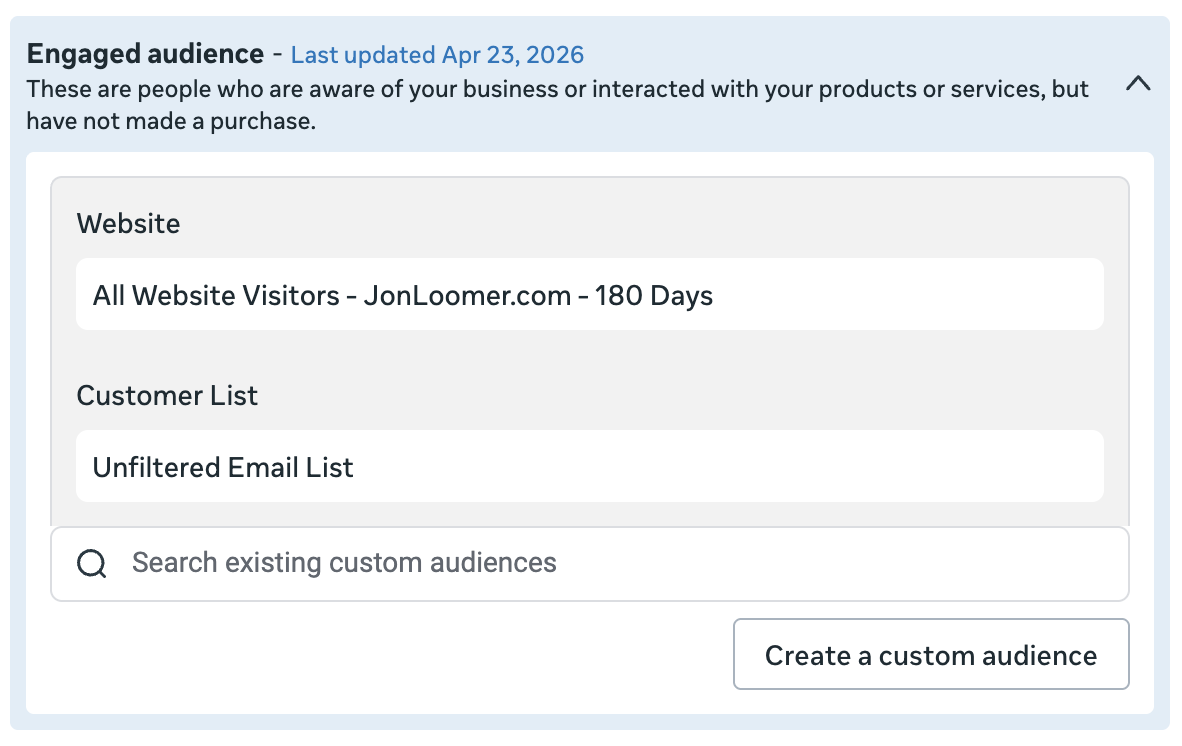
Audience segments are defined in Advertising Settings. Your Engaged Audience should be the broadest group of people connected to you, using custom audiences. I use custom audiences for my entire email list and all website visitors from the past 180 days.
Existing Customers should be defined with whatever custom audiences you have for those who have bought from you. I use a website custom audience for all purchase events from the past 730 days and an email custom audience reflecting all of my paying customers.
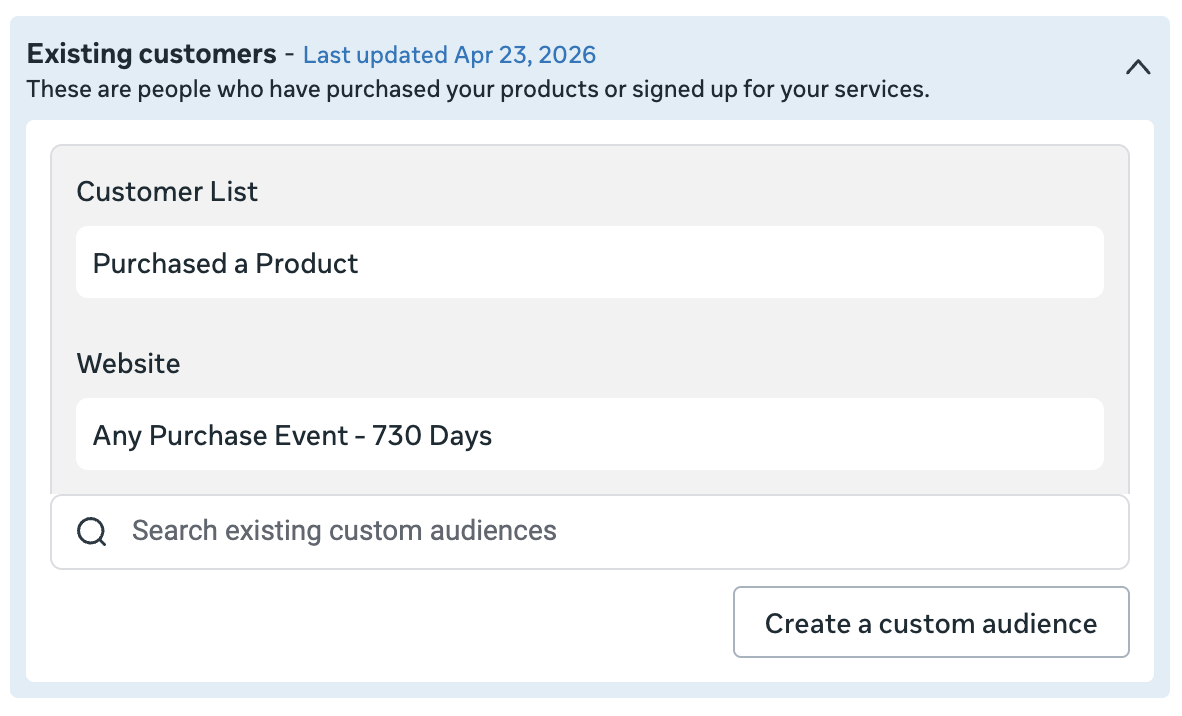
In May, Meta updated the longest retention window for purchase events to 730 days (2 years) from 180.
Note that audience segments are only used for reporting purposes. They will not influence delivery. So there’s no reason to limit these definitions.