Meta Advertiser Field Notes
Weekly observations from inside Meta ads
This week’s updates cover a follow-up on Push Delivery to This Ad, several ChatGPT ads changes, Meta’s plans to use website activity for Feed and AI recommendations, Reels post-view ads, and the growing perception that LinkedIn is overrun with AI-generated content.
- Can you push delivery to more than one ad?
- ChatGPT ads updates
- Website activity to inform feed content, Meta AI recommendations
- Reels post-view ads
- What percentage of LinkedIn content is AI-generated?
Let’s get to it…
1. Can You Push Delivery to More Than One Ad?
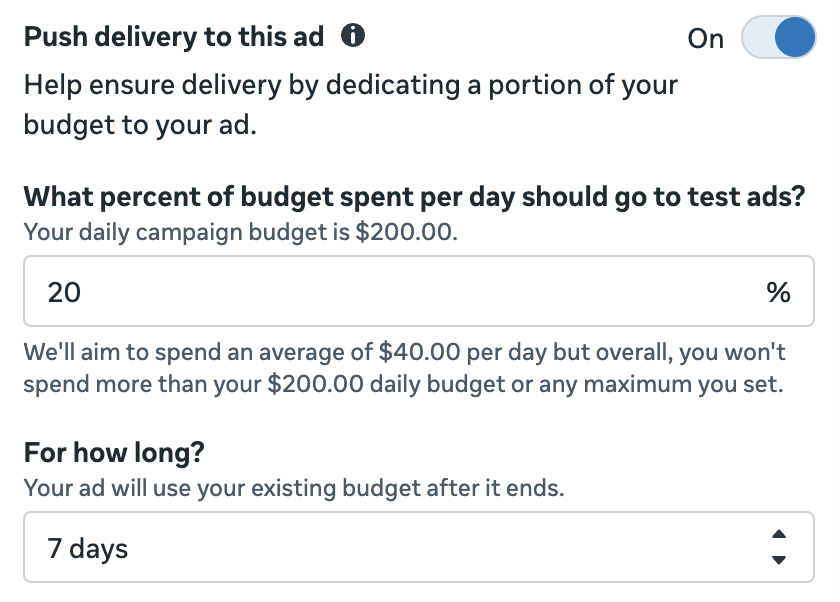
Earlier this week, I wrote about how I finally have the option to push delivery to an ad. This allows you to force Meta to dedicate a percentage of your budget to an ad, which could solve issues related to neglected ads or time-sensitive promotions.
At the time of writing the post, I was unclear about the implications of this message that comes up when trying to push delivery to more than one ad in a campaign or ad set at a time…
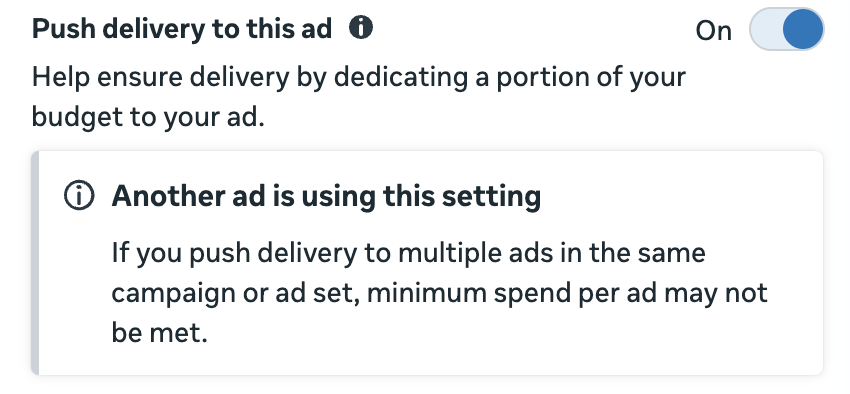
This certainly sounds like Meta doesn’t want you to push delivery to more than one ad at once. It suggests that if you do, it could make it difficult to reach minimum spend for each ad.
At the time, I was able to verify that this was at least a soft warning. There was nothing preventing me from pushing delivery to more than one ad. But the question I couldn’t answer then was whether this could create a delivery problem.
This isn’t something I want to test at high budgets or for any significant length of time since I don’t want to force delivery unnaturally without a reason. But what I can say is that I tested this with six ads, where I pushed 10% of the budget to five of the ads (10% each, totaling 50% of the budget).
Using the first $75.02 of the budget spent since making this change and ignoring partial days, Meta is pushing budget accurately.
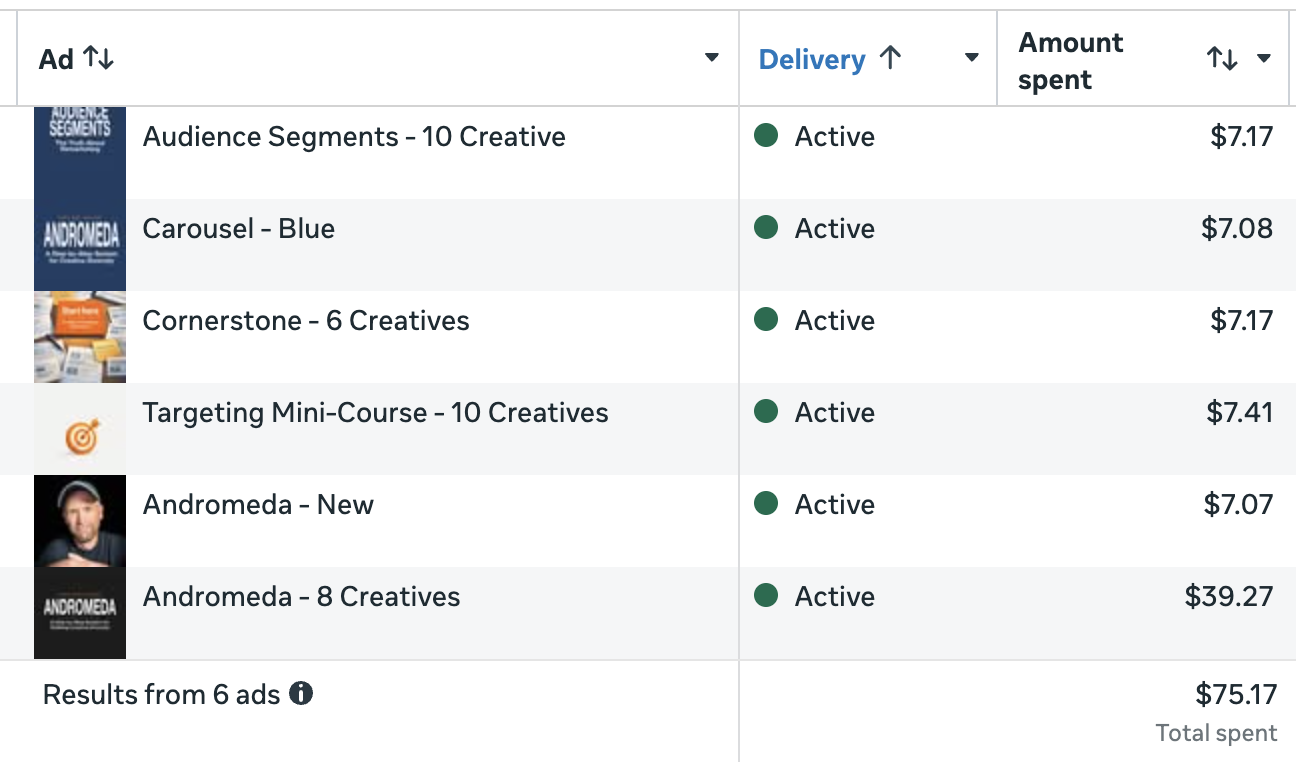
While I still can’t say confidently that this will always be the case, regardless of your budget, number of ads, or percentages you’re dealing with, this is at least encouraging that we shouldn’t be limited to pushing budget to a single ad — assuming it’s necessary.
One question I still have is whether the percentage requested is used as a minimum that will be exceeded in some cases. As you can see in the screenshot, the amount dedicated to each push is about the same. If one ad were recognized as a top performer, would Meta spend more?
My assumption is that Meta can spend beyond that requested percentage. In the example above, I only pushed delivery to ads that weren’t otherwise getting consistent spend. I can’t say for sure that this would happen, but it’s not unusual that these ads aren’t getting more spend than they are.
2. ChatGPT Ads Updates
I received an email from OpenAI last week that announced several features, some new to me and some not.
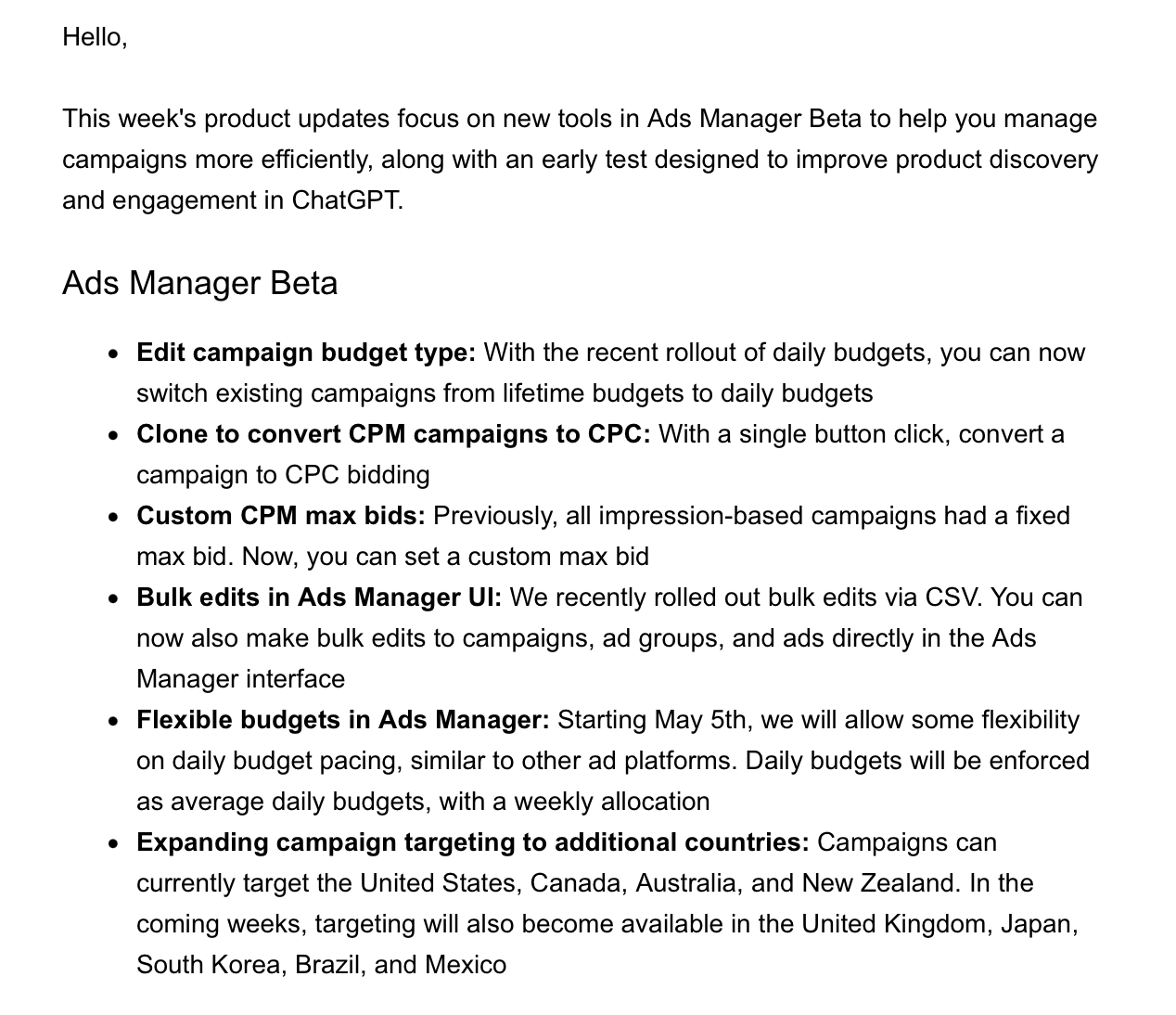
Edit campaign budget type: While I’ve always had the daily budget option, apparently not everyone did. All advertisers can now switch existing campaigns from lifetime budgets to daily budgets.
Clone to convert CPM campaigns to CPC: You can now convert a campaign to CPC bidding.
Custom CPM max bids: Once again, this update isn’t new to me. But apparently other advertisers had a fixed max bid before. Now, all advertisers can set a custom max bid.
Bulk edits in Ads Manager UI: You can now make bulk edits to campaigns, ad groups, and ads directly in the Ads Manager interface or using CSV uploads.
Flexible budgets in Ads Manager: Starting May 5th, OpenAI will allow some flexibility on daily budget pacing, similar to Meta ads. Daily budgets will be enforced as average daily budgets with a weekly allocation.
Expanding campaign targeting to additional countries: This one is brand new to me. Campaigns can currently target the United States, Canada, Australia, and New Zealand. In the coming weeks, targeting will also become available in the United Kingdom, Japan, South Korea, Brazil, and Mexico.
OpenAI also announced early testing of multi-advertiser ads.
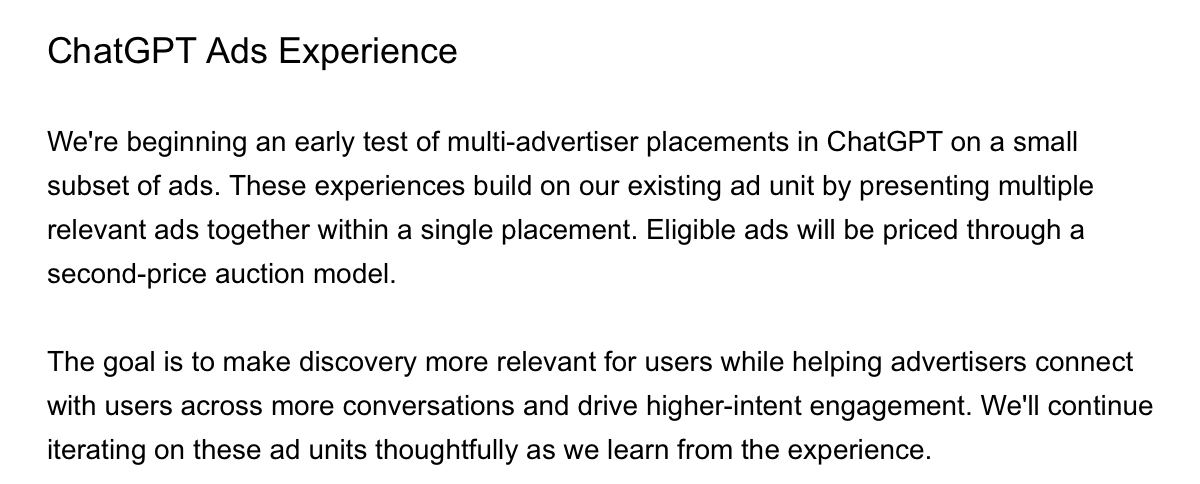
Up until now, there have only been single-advertiser ad units. This announcement says that multi-advertiser “experiences build on our existing ad unit by presenting multiple relevant ads together within a single placement.”
Meta advertisers are well aware of multi-advertiser ads. You won’t find many big fans of the unit.
I haven’t seen an example of multi-advertiser ads in ChatGPT yet, and it will be interesting to see how OpenAI gets creative with ad placements. It feels as though the potential for inventory is limited at this point.
Some other updates I noticed were related to product ads. Within the Tools section of the OpenAI Ads Manager, I noticed a new menu item for Feeds.
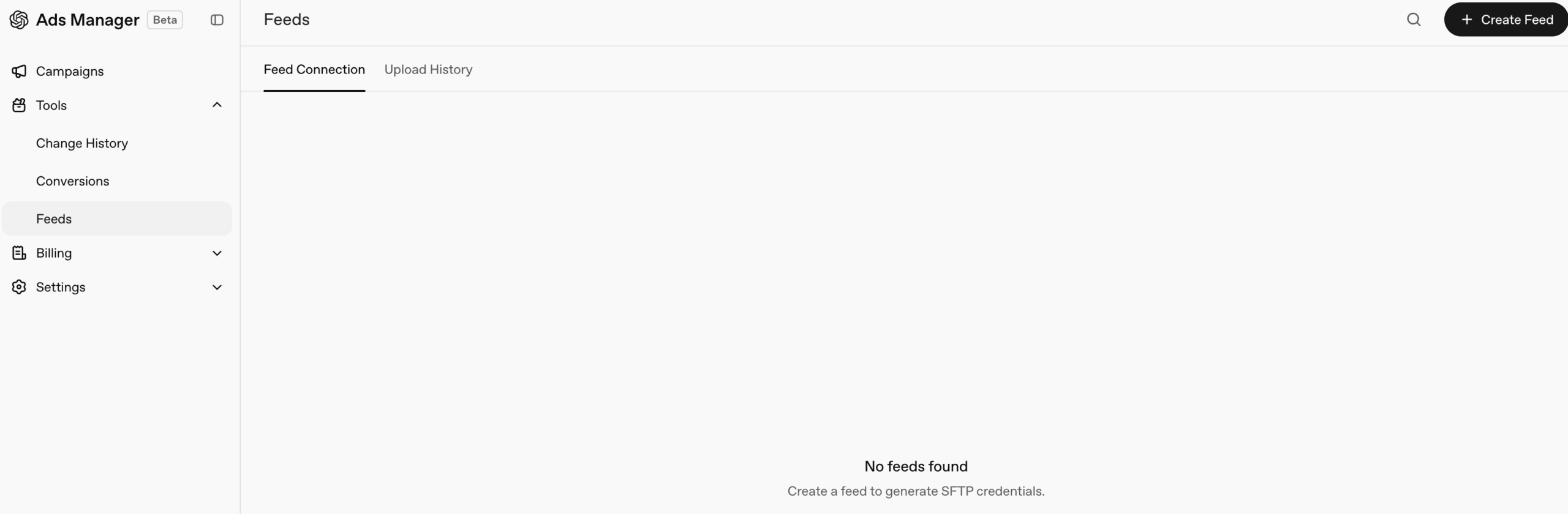
It wasn’t at all obvious at first what this was for. At this stage of the ChatGPT ads beta experience, there are few tooltips or links to documentation that help clarify setup or how to use certain features. If you click to create a feed, you can provide a merchant name and supported currencies.
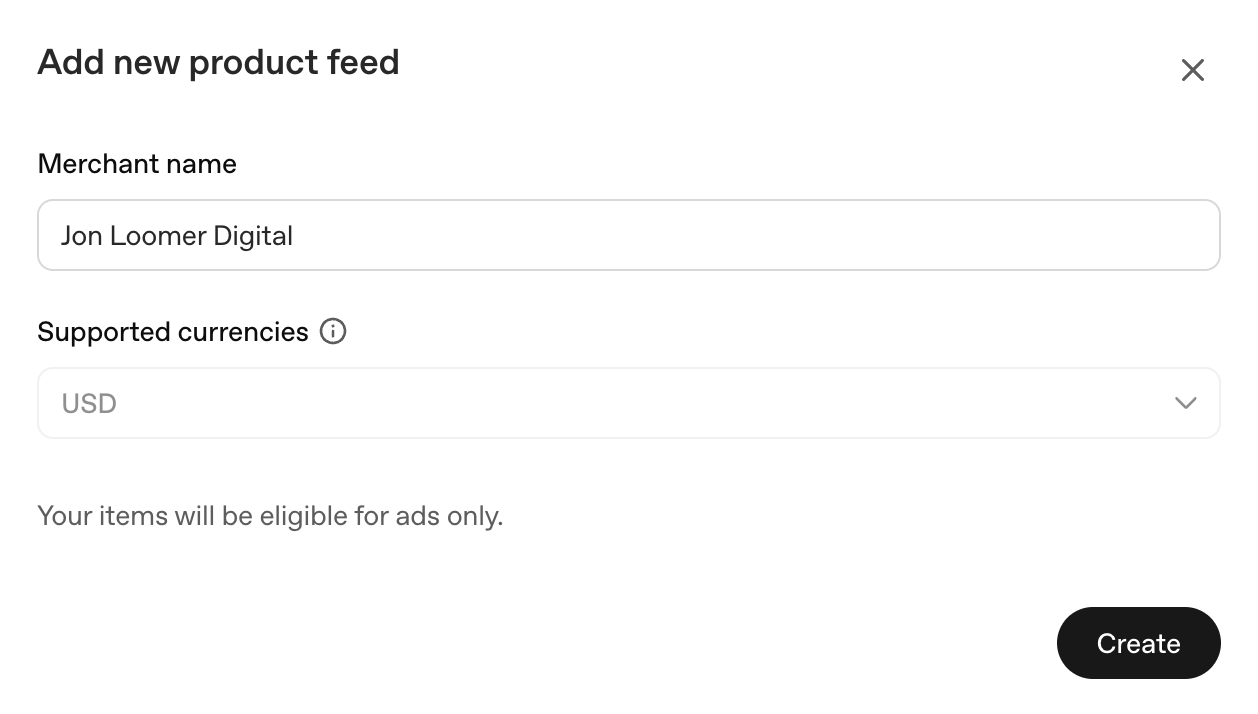
Once you click “Create,” you can provide SFTP connection details to bring in your product feed.
That’s relevant since there is now a Campaign Type option when creating a new campaign. “Standard” is the default, but you can also select “Product Feed.”

3. Website Activity to Inform Feed Content, Meta AI Recommendations
Meta made an interesting announcement about a change to how website and event data will be used.
We’re updating how we use information that other businesses already share with Meta. We already use this data — like games you play or purchases you make on other websites — to make the ads you see more relevant. In the future, we’ll use this information to personalize other parts of your experience, including the content you see in your Feed and AI responses.
Event data from advertiser websites, apps, and Conversions API connections is already used to inform the ads people see. But it hasn’t been used to help determine the organic content people see in their feeds.
I’ll admit I didn’t realize this. I’ve long assumed that Meta used advertiser data to help personalize the algorithmic feed — not just for surfacing ads, but organic content, too. That apparently hasn’t been the case. And if this is indeed changing, the potential is there to make the algorithmic feed more relevant.
But maybe more important is the news that this data will also be used to inform AI responses. If you’re having a chat with Meta AI, it will already know the websites you visit and apps you use, assuming that data was sent to Meta. And that could significantly impact the background the AI has for making recommendations.
And that could be both good and bad. You shouldn’t need to explain as much to the AI, which should lead to fewer frustrating conversations and more relevant responses. But that could also be incredibly creepy, depending on how that “knowledge” is surfaced.
If Meta can leverage this in a meaningful way, of course, it could be a significant advantage over Claude, ChatGPT, and other LLMs. It’s data that they simply do not have.
4. Reels Post-View Ads
Social Media Today reported on a press release indicating that Meta will make post-view ads available to more advertisers.
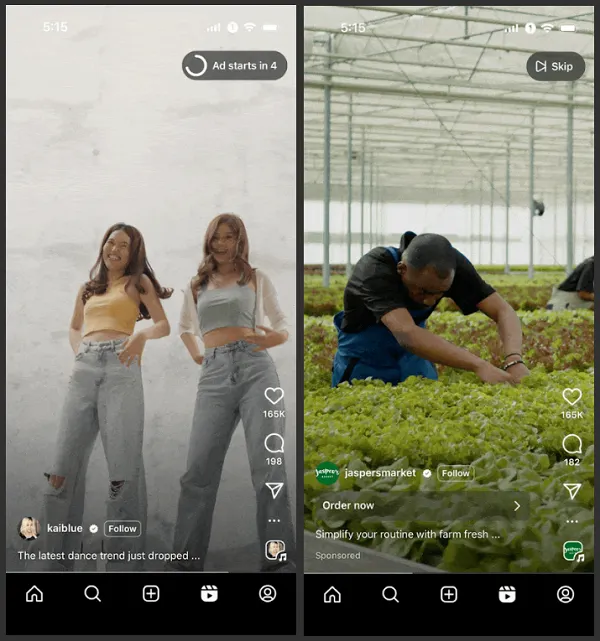
Here’s how they work…
These ads can be displayed after 60-second Reels, which is intended to capture highly engaged users. They include a 5-second countdown on the organic content, warning that an ad is coming. Once the ad starts, users can choose to manually skip, returning them to the Reel they were viewing.
I am not currently seeing this placement, but it’s something to watch.
5. What Percentage of LinkedIn Content Is AI-Generated?
I’ve been increasingly annoyed by the concentration of AI-generated content across social media. But it can’t possibly be worse than what we’re seeing on LinkedIn right now.
I decided to create a poll to see what others felt about the percentage of LinkedIn posts and comments that are currently AI-generated.
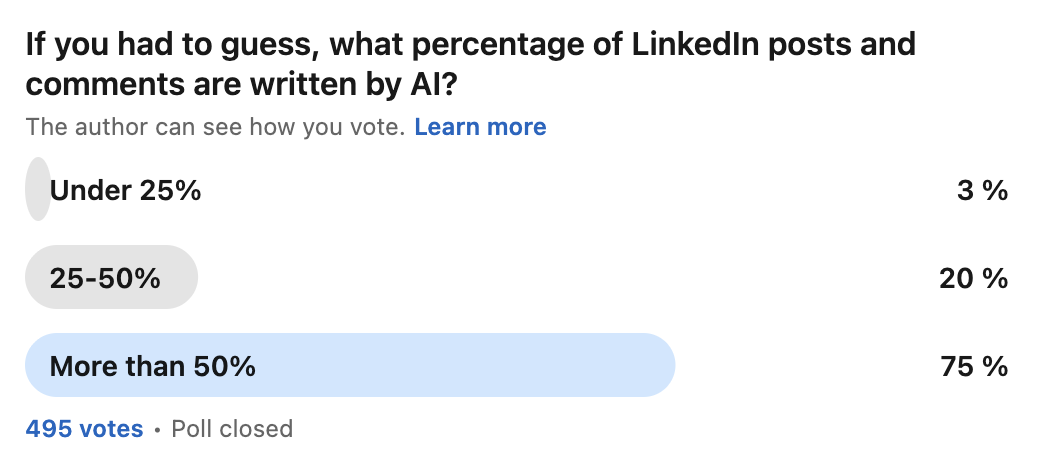
While unscientific in every way, it’s interesting how popular the belief is that such a high percentage of content on LinkedIn isn’t human-created. Could it really be more than 50%? My estimate is consistent with that vote. Though it’s certainly possible that my bubble of tech and marketing folks would reflect a greater level of AI experimentation than most.
The irony also isn’t lost on me that if a substantial percentage of LinkedIn posts and comments are AI-generated, that may also apply to participation in my poll. But perception is important here.
Whether the percentage is 15%, 35%, or 65%, it’s impacting the way we consume and engage. I assume that most of the comments on my posts are AI-generated now. I only react or respond to comments if I believe they actually represent the feelings of a human. I also won’t engage with posts that were clearly written by AI.
I’m certainly not alone in this change of behavior. What percentage of users are conscious of this and intentionally engage less as a result? At what point does it become a problem for the platform?
This isn’t just an issue for LinkedIn, of course. AI fatigue is everywhere. While it may still fall in that shiny object window for now, will people get fed up and abandon it all? Will it eventually just be a place for AI to engage with itself?
I’m curious what impact that change in behavior will have on these platforms and how the true human connection void will be filled.
Your Turn
What do you think about these updates?
Let me know in the comments below!