
The key to getting value out of Audience Segments is first accurately and thoroughly defining them. This directly impacts the results you see in the eventual breakdown (which we’ll get to in a later lesson). If you define your Audience Segments inaccurately or incompletely, it will lead to inaccurate or incomplete breakdown information.
This critical step happens in your Advertising Settings. When you’re there, you should see a collection of boxes that looks something like this…

Not everyone will have the same options here, but all advertisers should have the box for Audience Segments.
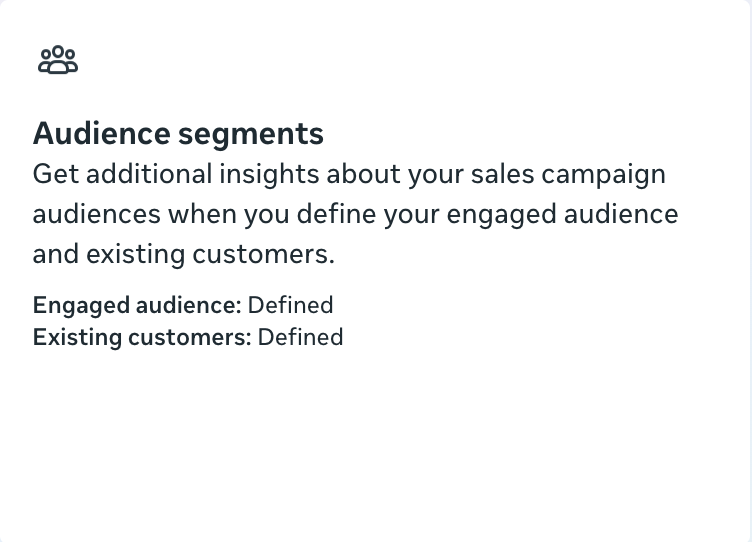
Click that. If you haven’t yet defined your Audience Segments, it should look like this…

Who is Your Engaged Audience?
Here’s how Meta defines Engaged Audience:
These are people who are aware of your business or interacted with your products or services, but have not made a purchase.
While accurate, it’s important to understand that anyone who exists in both your Engaged Audience and Existing Customers will only be counted as an Existing Customer. So do not worry about removing customers from your Engaged Audience.
Provide Custom Audiences
To define your Engaged Audience, you will need to provide custom audiences that represent this group. If they don’t exist, you should create them.
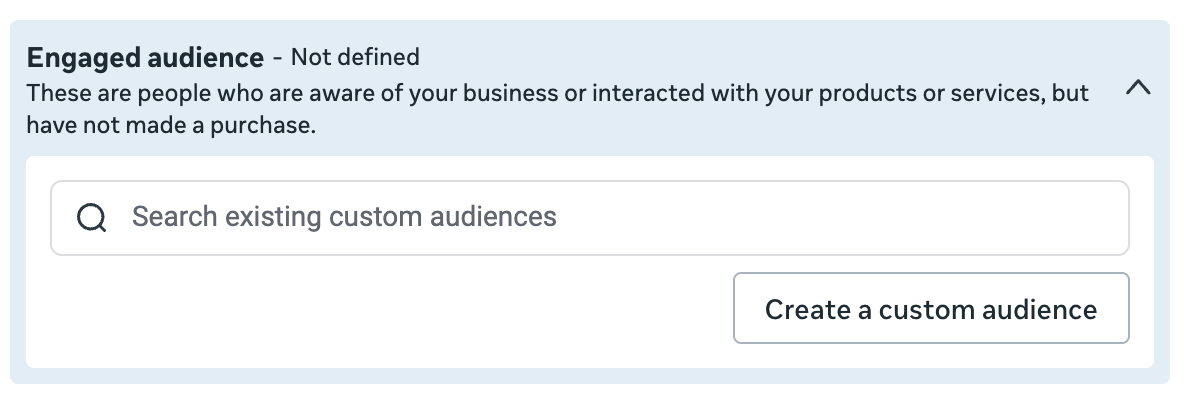
Not all custom audiences are eligible to be used in Audience Segments. If you click to create a custom audience, you’ll see the available options.
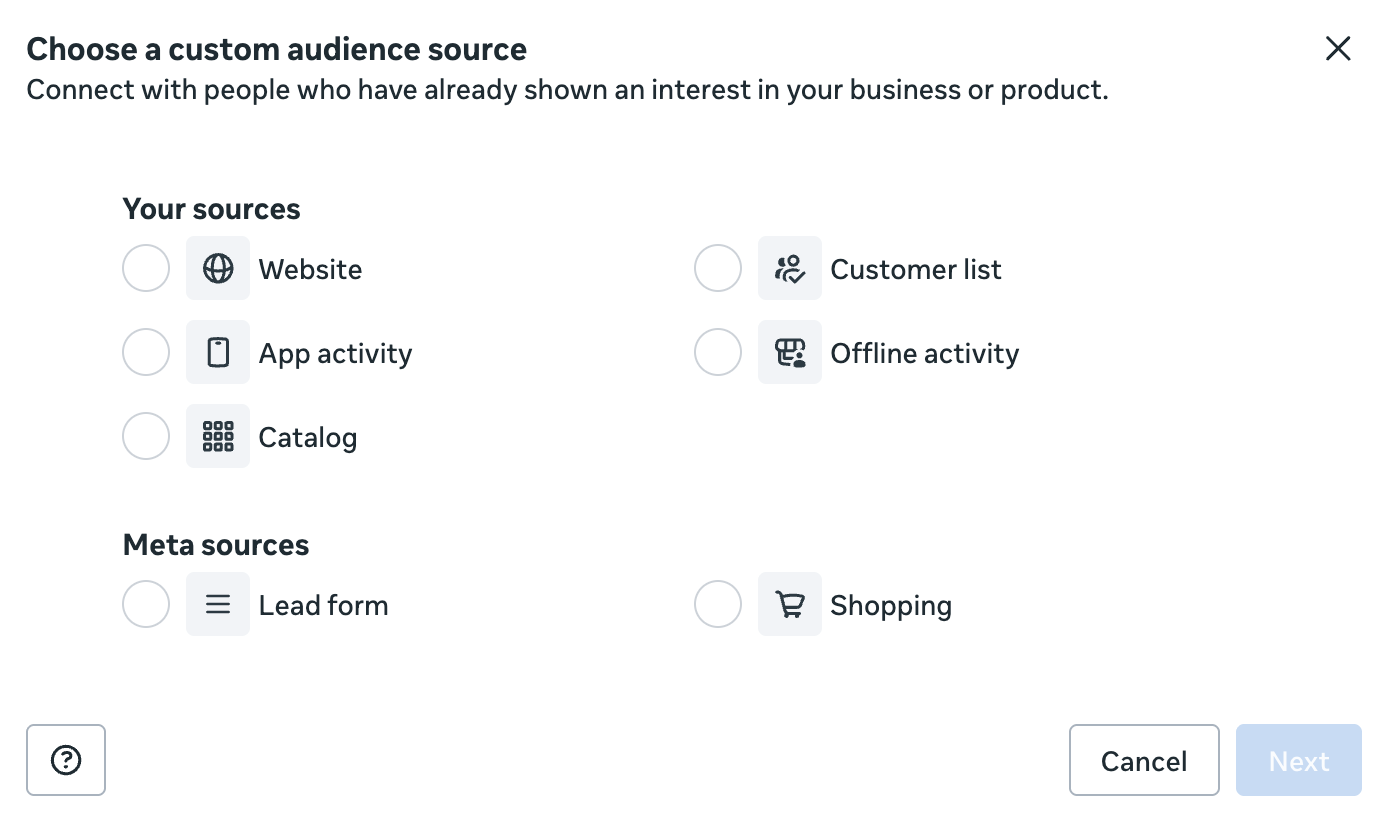
You’ll notice that there aren’t custom audiences for your Facebook Page, Instagram account, or video engagement. Most of what is available applies to engagement away from these platforms.
What applies to you will depend on your business, but you’ll want to provide all custom audiences that could reflect the people who engage with your business.
Prioritize Widest Audience Possible
One of the mistakes advertisers make is that they start picking and choosing the people who should be in their Engaged Audience. Understand that the point isn’t to isolate your most valuable or recently engaged audience. We want to include everyone who has engaged with us so that we can see that reflected in reporting when they’ve been reached.
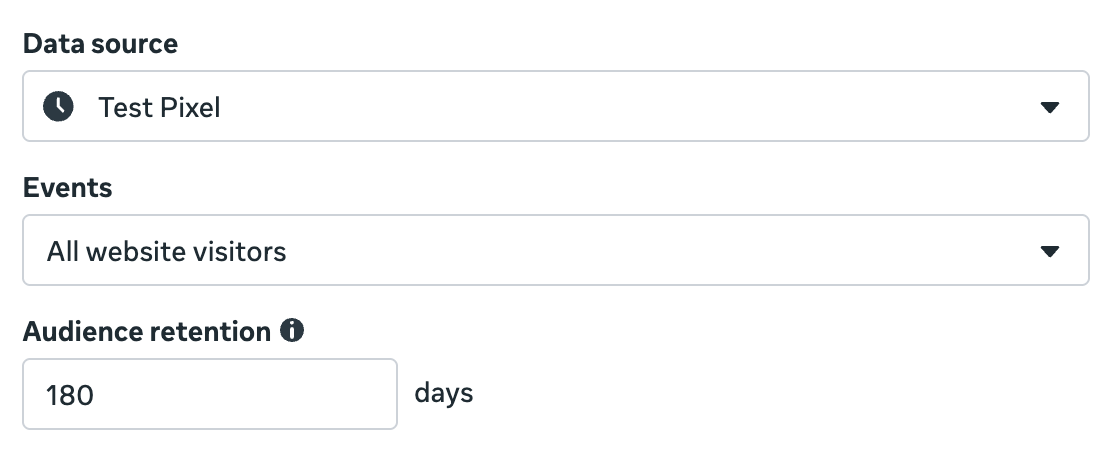
Let’s use the Website Custom Audience as an example, because it will be the most common. You’ll want to use a Website Custom Audience of all website visitors, not just visitors to certain pages. It doesn’t matter whether they performed an event or not. And use the widest time window possible, which is 180 days.
Take the same approach for other custom audiences. You should use a custom audience for your entire email list, for example, not just certain customers or covering a certain amount of time. And ideally, you’ll have that audience synced with a third-party tool to keep it updated and complete.
Example
My Engaged Audience is very simple:
- All website visitors (180 days)
- Entire email list
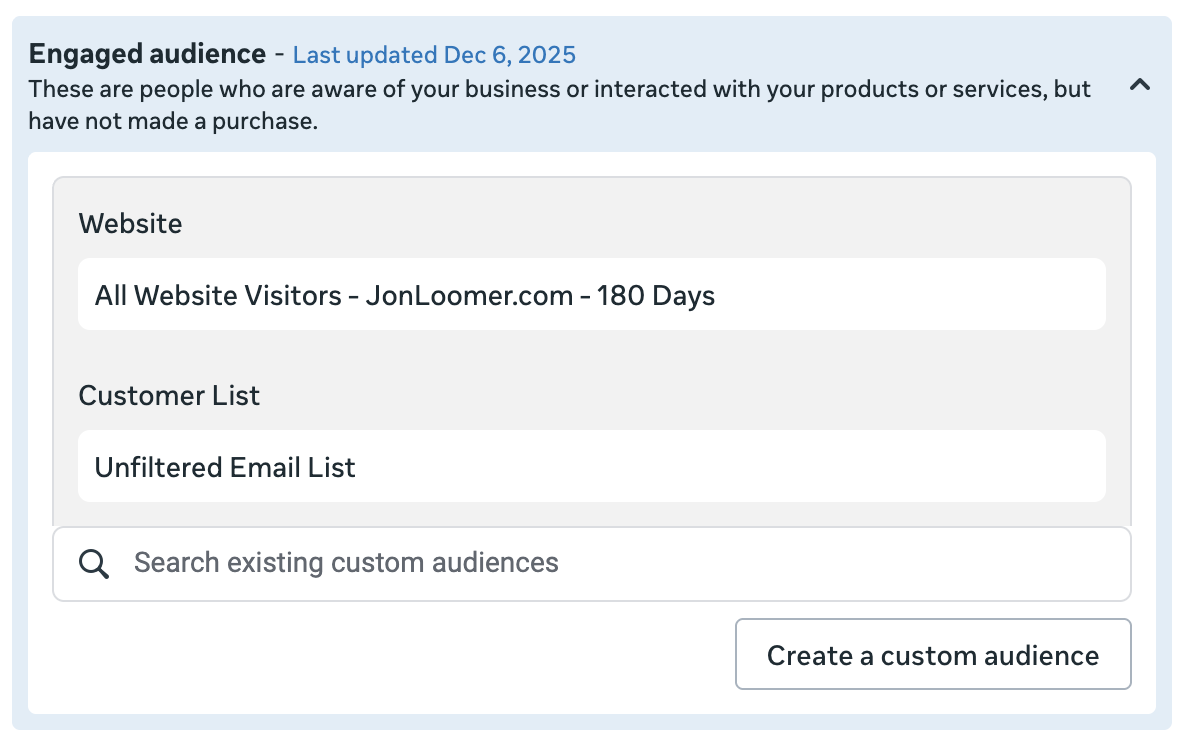
Don’t overthink this. You’re not going to get extra points or better results by focusing on more valuable engagement. Make this as complete and thorough as possible.
And as you can see from my example, “complete and thorough” doesn’t necessarily mean a bunch of custom audiences. I only need one website custom audience to represent all of my website visitors. Any others would be unnecessary because they’d already be included in the All Website Visitors audience.
I didn’t include any others because they aren’t currently relevant to my business. While I’ve run Lead Ads with Instant Forms, I haven’t in over a year, so those audiences have long expired (they have a maximum window of 90 days).
If you hadn’t previously created the widest custom audience possible for a given type to use here, create it. Keep it simple.
Guiding Principles
When you are doing this, it may be helpful to remember the “why” behind it. Ultimately, you want to know how your budget is distributed between your Existing Customers, Engaged Audience, and New Audience, and how each group contributed to conversions.
That’s it. This isn’t controlling targeting. If you don’t provide a thorough representation of your Engaged Audience, you’ll see less impact from that group — which would likely be a misrepresentation.
Just remember that the only way to mess up the Engaged Audience is to be incomplete. You don’t need to remove anyone, even if they’ve bought from you before.
Those paying customers will be accounted for in the next lesson.
Power Hitters Club
Audience Segments Are Just the Start
If this course opened your eyes to what’s possible with Audience Segments, there’s a lot more where that came from. Inside Power Hitters Club – Elite, I go deep on the stuff most advertisers aren’t talking about — like how I use creative testing, Value Rules, and breakdowns to make better decisions every week. You also get a private community of advanced advertisers, weekly strategy sessions, and my Ad Briefs, which are living documents where I lay out my current approach and update them as things change. This is where the serious advertisers hang out.

