When you choose the “maximize number of conversions” performance goal, you have to select a conversion event. This could be a standard event (like “purchase”), a custom event, or a customer conversion for the specific product that you’re selling in the ad.
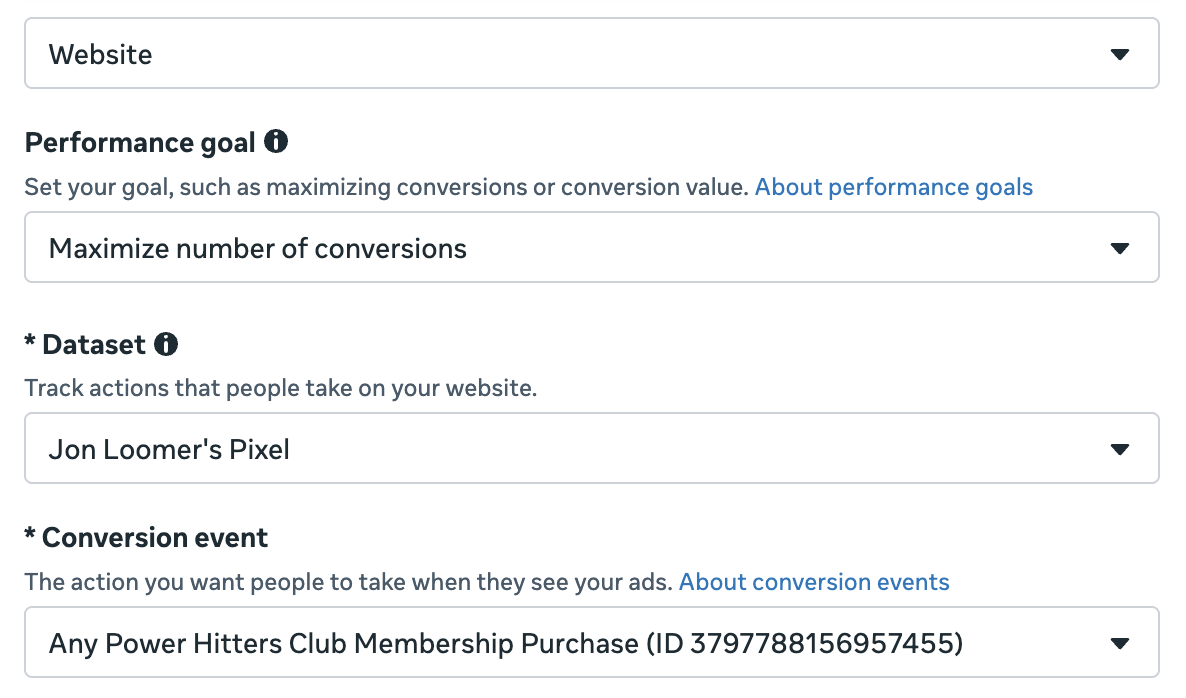
Using a custom conversion can make sense, and it’s not technically wrong. But I’d still recommend using the standard event in most cases. Here’s why…
What is a Custom Conversion?
First, let’s get this out of the way because it’s the source of common confusion. A custom conversion and a custom event are not the same thing.
Standard Event: One of the predefined actions Meta has already named, such as Purchase, Lead, CompleteRegistration, AddToCart, InitiateCheckout, and ViewContent.
Custom Event: A conversion event that is relevant to your business but cannot be defined with a standard event. I’ve created events like PodcastPlay, VideoPlay, and ScrollDepth that represent important actions and fall outside of the standard event definitions.
Custom Conversion: Created without code, define a conversion using rules. Examples include creating a rule based on a specific URL or parameters sent with a standard or custom event. This allows you to isolate segments of a specific conversion type. For example, you can create custom conversions for all purchases over $50 or purchases of a specific blue shirt.
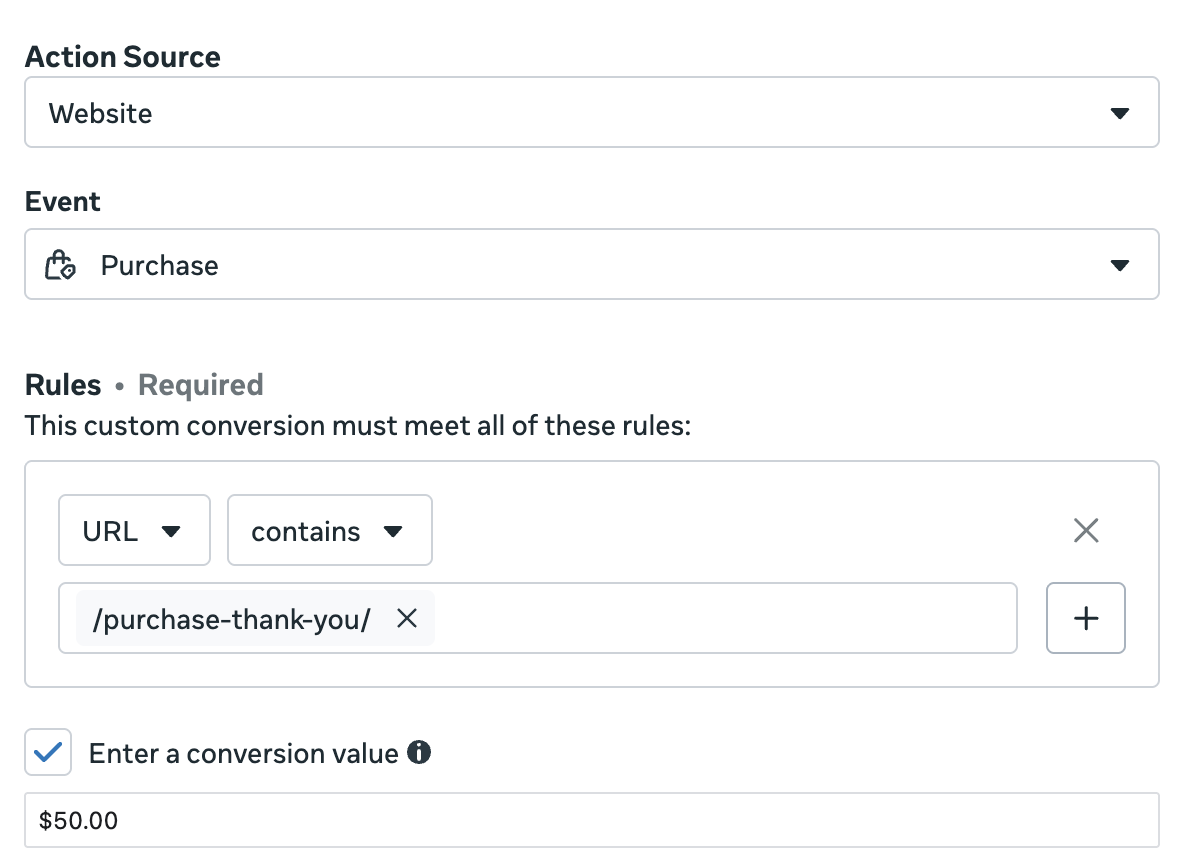
Standard and custom events are usually created with code, though they don’t have to be. A purchase event is usually sent with the purchase of any product. A custom conversion can help focus on the purchase of a specific product.
The Volume Problem
In theory, optimizing for a custom conversion could help guide Meta toward the exact action you want, and it prevents inflated surface-level results. Because if you optimize for the purchase event, reported results don’t have to be for the product you’re promoting.
Conversion volume is a common challenge for advertisers, especially when running sales campaigns. So if you’re already struggling to get conversion volume, optimizing for a custom conversion will limit volume even more.
And volume is helpful for both you and Meta’s delivery optimization. If you’re getting very few conversions, Meta will assume your ads are failing.
Limiting results using custom conversions also might mean sharing performance with your clients that doesn’t fully reflect your impact. If someone clicked your ad and bought something else, wouldn’t you want to know that? Wouldn’t a client?
Inflated Results?
The issue of inflated results is usually only a problem if you’re bad at interpreting what your results mean. You should never take your results at face value because default reporting includes a mixture of click conversions, view-through conversions, engage-through conversions, first vs. all conversions, and potentially conversions for products you weren’t promoting.
Understand that the “inflation” issue is unlikely to be much of a problem. If you’re sending traffic to a specific product page, the vast majority of conversions that appear in your results will be for that product. Those numbers can increase if you give visitors more opportunities to buy something else.
Ultimately, it’s your job to separate the meaning of those results. Use the breakdowns by attribution (settings and conversion count) to better understand what your results mean.
So my recommendation is to usually use a standard event for optimization. Then add a column to your reporting for the custom conversion so that you know how many of that product you’ve sold.
When it Makes Sense
There are times when optimizing for the custom conversion might make sense. It starts with getting enough volume for the custom conversion first to exit learning.
There also needs to be a clear problem you’re trying to solve that goes beyond simply inflated surface-level results. Meta may be leaning too heavily into a product that isn’t profitable for you. But again, that’s rarely going to be the case unless you make it easy to buy something else from the page you’re sending people.
While it can make sense, make sure there is clear reasoning behind optimizing for a custom conversion first.